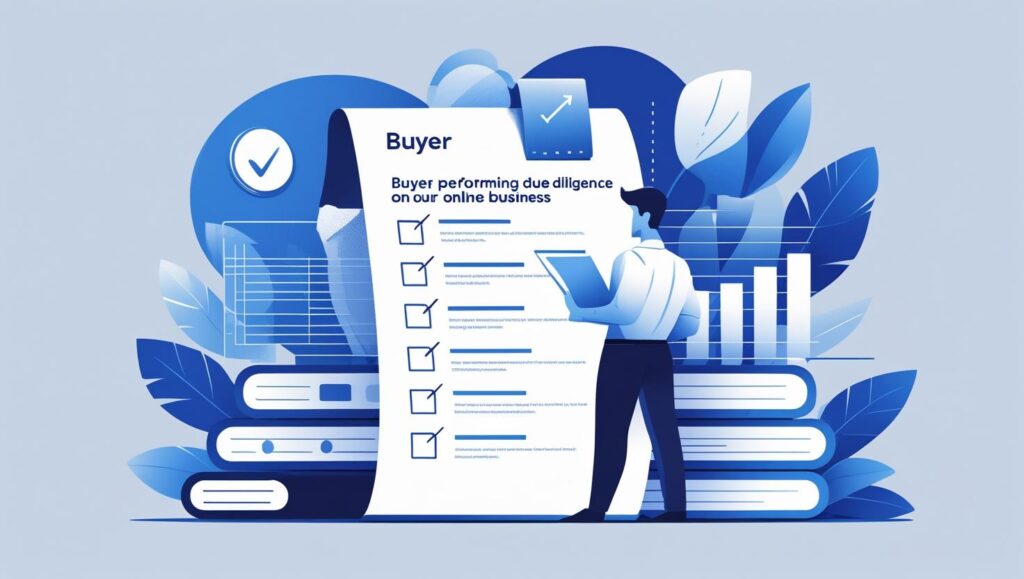
Buying an online business is exciting and potentially profitable—but it’s also one of the riskiest investments if proper due diligence isn’t performed. Whether you’re a first-time buyer or a seasoned digital entrepreneur, understanding exactly what you’re acquiring is crucial.
This guide walks you step-by-step through the complete buyer due diligence process, including tips, tools, and best practices for verifying a website’s legitimacy, revenue, traffic, and intellectual property.
🧭 What Is Due Diligence?
Due diligence is the process of verifying that an asset is as it’s claimed to be. In the context of online business acquisitions, this includes:
- Confirming revenue claims
- Validating traffic and user engagement
- Ensuring the business operates legally and ethically
- Verifying intellectual property and technical assets
At Flippa, we offer full-scale due diligence services, but you can also perform thorough checks yourself using this comprehensive checklist.
🔍 Step 1: Understand the Business Model
Before diving into financials or traffic reports, you need to understand how the business actually operates. Ask the seller:
- Is it eCommerce, SaaS, affiliate marketing, or content-driven?
- Does it require inventory or dropshipping?
- What is the daily/weekly time commitment?
- What technical skills are required to operate the business (e.g., WordPress, Shopify, coding)?
- What are the primary monetization methods?
Understanding these basics will help you determine whether the business fits your skills, resources, and goals.
🧾 Step 2: Verify Domain and Ownership
WhoIs Lookup
- Use whois.domaintools.com to check the domain’s registration history.
- Review changes in domain ownership, IP address, hosting provider, and registrar.
- Multiple changes within a short period (+/- 3 days) may indicate red flags.
Hosting History
- If the domain is privacy-protected, examine hosting history.
- Verify that ownership and infrastructure have been consistent over time.
🤝 Step 3: Get to Know the Seller
Building trust with the seller can make due diligence smoother.
- Check social media and LinkedIn profiles for the seller’s business history.
- Ask about reasons for selling, past performance, and future growth ideas.
- Request a conference call or screenshare to answer detailed questions.
💡 Tip: An authentic seller is transparent, confident, and willing to provide supporting data.
⚙️ Step 4: Investigate Business Operations
- Understand who performs which tasks, their time commitment, and technical expertise.
- Review the standard operating procedures (SOPs) for the business.
- If there are employees, understand their roles and how they contribute to revenue and traffic.
- Ask about outsourced services and their costs.
📝 Step 5: Check Content and Plagiarism
- Use Copyscape to ensure content is original.
- For blogs, check a sample of 5–10 articles for plagiarism.
- Confirm that the website uses white-hat SEO techniques.
🏛 Step 6: Verify Establishment and History
- Use archive.org to check the website’s historical snapshots.
- Look for large gaps in archives—they may indicate downtime or domain parking.
- Check the site’s robots.txt; if archive.org is blocked specifically, proceed with caution.
🔒 Step 7: Legal Protections
Non-Compete Agreements
- Ensure the seller agrees not to compete in the same niche for a set period (typically 2–3 years).
- Negotiate if necessary, especially if the seller owns similar sites.
Trademarks
- Check for trademarks on business or domain names.
- Verify that the domain doesn’t infringe on existing trademarks (e.g., iphone7.com would be problematic).
- Resources:
💵 Step 8: Financial Verification
Refund/Chargeback Rate
- For eCommerce, refunds/chargebacks should generally be under 2%.
- Ask for a trend analysis to ensure this isn’t a recurring problem.
Revenue Accounts
- Verify that payment accounts (PayPal, Stripe, etc.) can be transferred or replaced easily.
- For subscription models, confirm how current subscribers will transition to the new owner.
Taxes
- Confirm the business has properly filed taxes.
- Any discrepancies could create future liabilities.
TTM Financial Trends
- Review Trailing Twelve Months (TTM) revenue trends.
- Investigate sudden spikes or drops in revenue to understand causes.
📊 Step 9: Traffic and Analytics
GA Access
- Request read-only access to Google Analytics for full visibility.
Traffic Sources
- Verify that organic, referral, and paid traffic sources are legitimate.
- Cross-check revenue per visitor with the business model.
- Watch for unusual referral traffic or potential paid bot traffic.
Visitor Engagement
- Evaluate bounce rates, session duration, and returning visitor percentages.
- Extremely low or high engagement may indicate tracking errors or fake traffic.
Paid Traffic
- Identify any paid traffic campaigns and confirm associated costs.
- Assess sustainability and ROI.
Traffic/Revenue Countries
- Verify that the locations of traffic sources align with customer base and revenue.
💻 Step 10: Technical Operations
- Ensure all platforms, plugins, and software licenses are included in the sale.
- Verify that source code is clean, functional, and transferable.
- Confirm transfer of all domains, email lists, customer records, and product assets.
🏆 Step 11: Intellectual Property
- Confirm ownership of website content, proprietary tools, or unique technology.
- Include clauses in the sale agreement to secure intellectual property rights.
✅ Step 12: Make the Offer
Once all due diligence checks out:
- Assess valuation and risks
- Negotiate terms with the seller
- Prepare contracts ensuring intellectual property, revenue, and assets are clearly included
Own Your Ideal Venture
Find the perfect digital business to match your ambitions on SilkyRoad.net, with a focus on profitable e-commerce stores and valuable content sites.
💡 Key Takeaways
- Understand the business model thoroughly
- Verify ownership, domain, and hosting history
- Build rapport with the seller
- Review operations, SOPs, and employee roles
- Check content originality and SEO practices
- Confirm website history via archive.org
- Secure legal protections: non-compete, trademarks
- Audit financials, refunds, taxes, and revenue accounts
- Analyze traffic sources, engagement, and GA data
- Verify technical and software assets
- Secure intellectual property
- Negotiate and finalize the purchase confidently
By following this checklist, you minimize risk and ensure your purchase is legitimate, sustainable, and profitable.